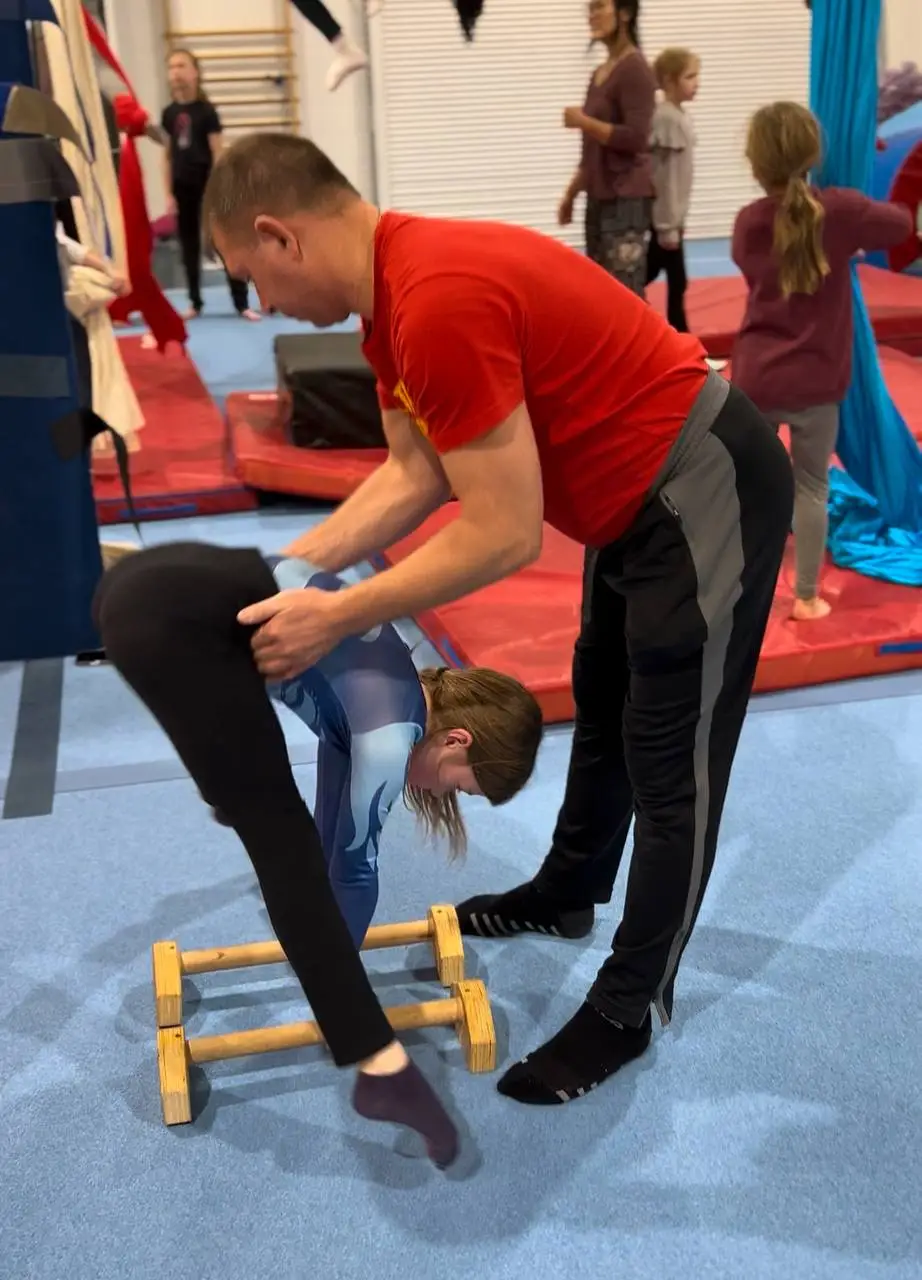
At Capital Circus, we believe that high-level acrobatics can be learned safely and effectively with the right progressions. The straddle press to handstand (often called “press to handstand” or in Russian “спичаг”) is one of the most beautiful and technically demanding strength elements in gymnastics and circus arts. It requires a combination of flexibility, control, and significant upper-body and core strength.
In this guide, you’ll learn:
- What muscles are involved
- Preparation and conditioning
- Step-by-step progressions
- Common mistakes and how to fix them
Whether you’re a circus student, a handstand enthusiast, or simply curious about bodyweight strength, this guide will walk you through exactly how to build your press safely and correctly, starting from zero experience.
Muscles Involved in a Perfect Press to Handstand
A clean press relies on far more than arm strength. The movement challenges nearly the entire upper body and core:
Shoulders — stabilizing and controlling the lean
Triceps — keeping the elbows locked
Core & hip flexors — creating the compression needed to lift the legs
Lower back — stabilizing as the body inverts
Forearms & wrists — supporting and balancing your weight
Most people struggle not because they’re “not strong enough,” but because their flexibility and compression limit their ability to lean and lift.
Press to Handstand Progressions for Beginners
Progression 1: Wall-Assisted Press to Handstand (Head Supported)
This is an excellent first step for beginners and teaches the basic mechanics without the fear of falling.
1. Start in a deep pike fold
Stand close to the wall — just a few cm away.
Fold forward until your stomach rests on your thighs and place your palms on the floor, shoulder-width apart.
Let the back of your head touch the wall for stability.
2. Rise onto your toes and shift forward
Your weight should move gradually into your hands.
Keep your elbows fully straight.
3. Lift into handstand
As your hands begin to carry almost all of your weight, gently lift your feet from the floor and allow the legs to float up.
Your head and upper back may lightly touch the wall, but your legs should remain free.
Perform 4–5 sets of 4–5 controlled lifts.
Progression 2: Shoulder-Supported Wall Press to Handstand
This variation is the next step once you feel comfortable with the head-supported version.
You’ll lean deeper into the shoulders, which trains the essential “forward shift” needed for a free-standing press.
Move slowly, the weight transfer is strong, and rushing it can cause you to lose balance.
Progression 3: Bent-Leg Press to Handstand (No Wall)
Once you’re ready to work away from the wall, start with bent legs. It reduces the leverage and makes the lift more accessible.
1. Begin in the same deep pike position
Hands planted, legs straight.
2. Shift forward and lift the feet
Bend your knees toward your chest as your toes leave the floor.
3. Extend into the handstand
When you find your balance, straighten your legs upward and open into a straddle.
This progression builds the strength and control needed for the full straight-leg press.
Common Mistakes
1. Leaning too much forward
This is the single biggest reason people can’t lift their legs, keep your shoulders in position do not try to lean forward, do not think about lifting your legs but move your weight over your shoulders.
Solution:
You can practice with the wall for support at first.
2. Bending the elbows
Bent arms cause instability and make the movement harder.
Solution:
Think about “pushing the floor away.” Maintain a locked out position at all times.
Final Thoughts
A clean press to handstand is more than a party trick, it’s a sign of real technical mastery. With patience, thoughtful conditioning and a willingness to train the basics, anyone can develop the strength and flexibility needed for this beautiful skill.
At Capital Circus, we celebrate progress in all forms. Take it slow, enjoy the process and remember: the journey to your press is just as rewarding as the press itself.